

Jaydee - Plastic Dreams
The Trusting Invitation, The Emotional Dance, The Creative Struggle

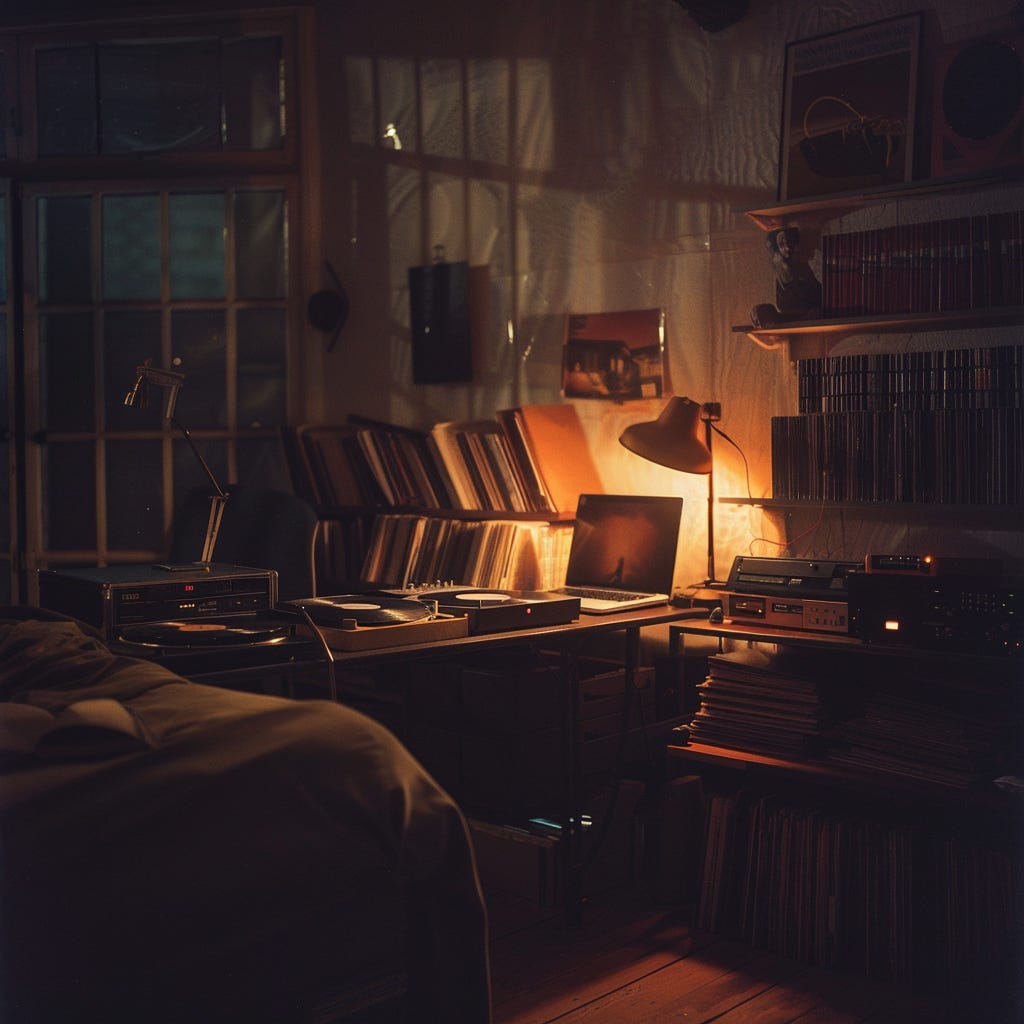
In the quiet moments of my daily routine, I find myself returning to the act of curating playlists, not just as a hobby, but as a ritual that stitches together my emotional landscape and my relationships. Recently, I was immersed in a process that reminded me how deeply sound can serve as a bridge, a language that speaks directly to the heart of connection.
The core of this ritual began with a simple note: a reflection on a recent exchange with a fellow house lover who listens to my playlists each month. Their request for a track, a specific piece of music that resonated with them, became the seed for a deeper exploration of how sound functions as a vessel for intimacy.
What I love about this experience is that I had never heard of Jaydee. “Plastic Dreams”, their requested song, hit #1 on the US Hot Dance Music/Club play chart in 1993. The sound is something I don’t hear too often in club spaces today, yet there’s an eclectic genre mix of techno spice, jazz licks, and organ riffs that transport you to a late night set. A moment, a listening session, where you’re in tune with reverence to a 30 year old classic that still moves people whether in dance or in an emotional state.
Jaydee’s “Plastic Dreams”, from Belgium, is a rave instrumental to compete with Herbie Hancock’s “Rockit”. The Jaydee touch—earthy in the keyboard melody, unstoppable and space-bound in the wave after wave of rhythm tracks—is warm, brave. Both “Trance” and “Tribal” mixes excel.
As I sifted through my collection, I was stalled in finding the right track to mix around “Plastic Dreams”. I chose the longest version of “Plastic Dreams” and there was a complexity to matching vibes to my own intentional sound. So, I decided to reflect on the one artist that has always spurred influence and inspiration to my curation.
I was drawn to a track by Columbian DJ, Felipe Gordon, a briliant instrumentalist whose work embodies the soulful, rhythmic pulse of underground house. His music, with layered textures and hypnotic grooves, became a reference point for the mood I wanted to cultivate around “Plastic Dreams”. With Gordon’s “Travel Through Your Mind”, I was able to capture at 1:33 playtime how each beat and melody could serve as a conversation, a whisper that invites the listener into a shared space.
This process isn’t just about selecting songs; it’s about building a narrative, a sonic environment that reflects and amplifies the emotional undercurrents of the moment. I envisioned a flow that transitions smoothly, guiding the listener from one emotional state to another-much like a conversation that deepens with each exchange.
Supporting this core are tracks and artists that orbit around the main theme- places, concepts, and sounds that enrich the experience. For instance, the textures of jazz house and the minimal, acid influences add layers of complexity, mirroring the multifaceted nature of human connection.
What makes this ritual powerful is its intentionality. It’s a space where sound becomes a language of care, a way to say, without words, that someone’s experience matters. When I build playlists, I’m not curating music; I’m crafting a shared moment, a space where vulnerability and understanding can flourish.
The feeling that emerges from this process is one of gratitude and curiosity. Gratitude for the ability to connect through sound, and curiosity about how these curated moments can evolve, deepen, sound, and serve as anchors in our lives. It’s a reminder that music, at its best, is an act of love-an ongoing dialogue that sustains us.
This approach to sound as a ritual transformed how I see my role as a curator. It’s no longer just about taste or trend, but about fostering genuine connections that resonate beyond the immediate moment. Each playlist becomes a vessel, carrying stories, emotions, and intentions.
In a world that often feels fragments, these sonic rituals offer a space for presence and intimacy. They remind us that, through sound, we can build bridges-connecting past and present, self and others, silence and song. And in doing so, we craft a landscape of shared human experience, one note at a time.